For psychologists & mental health clinicians

Transforming how GPs and mental health clinicians work together

Collaborative care, better outcomes. Join GP-led case conferences from anywhere — bring your mental health expertise to complex and comorbid patients without ever leaving your practice.

Flexible · remote · secure — and rewarded at a premium rate for your expertise.

Backed by MBS item numbers for mental health · No cost to join.
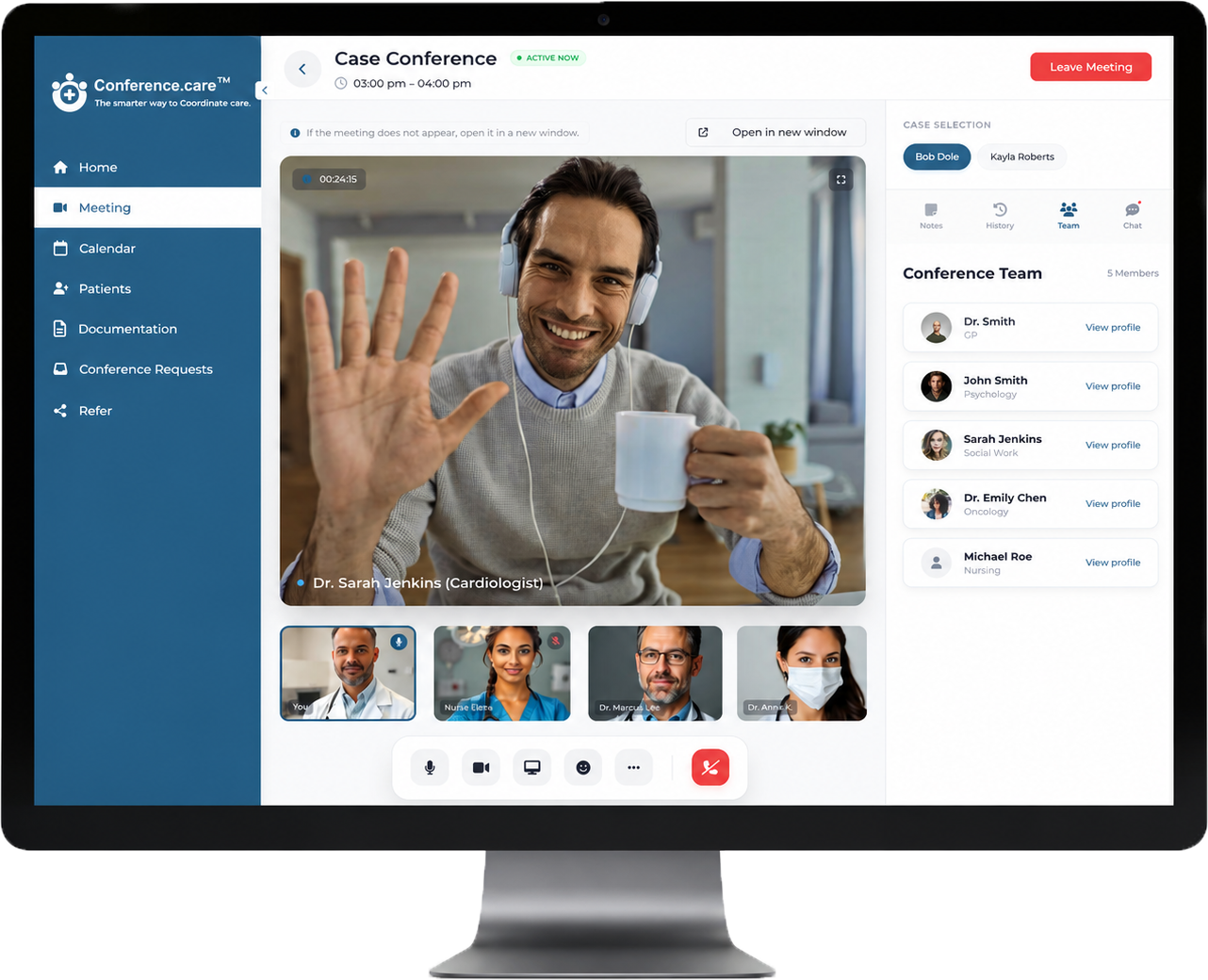
The Conference.care case-conferencing platform
$240per hour of
case conferencing
93%of patients report
a positive effect
$240
per hour of case conferencing
Premium
MBS-backed rate for your expertise
5
eligible clinician types
100%
remote & secure

See it in action

Case conferencing, explained in two minutes

The problem

Mental health care is fragmented

GPs manage the mental health of increasingly complex patients, often alongside chronic physical illness — yet they rarely have a direct line to the psychologists and mental health clinicians involved in that care.

22%

of Australians aged 16–85, 4.3 million people, experienced a mental disorder in the past 12 months.

ABS National Study of Mental Health and Wellbeing, 2020–22 (via AIHW)
71%

of patients with severe mental illness also have a physical health condition, vs 54% of people without — yet their care teams seldom speak directly.

Belcher et al. 2021, Aust J Gen Pract (via AIHW)

With limited opportunities for real-time discussion or shared decision-making, GPs are left to manage complex mental health presentations without input from the clinicians who know the patient best — resulting in poorer outcomes and higher system costs.

The solution

Case conferences bring the team together

A case conference is a multidisciplinary meeting between a patient's GP and several health professionals to coordinate care for those with complex mental health or comorbid conditions.

Unlike standard correspondence, case conferencing enables real-time dialogue — shared decision-making and cohesive treatment, without requiring the patient to attend or be referred externally.

The goal: ensure every aspect of a patient's mental and physical health is addressed in a coordinated way — improving continuity of care and reducing system strain.
Psychologist on a video callPsychologist
GP on a video callGP
Mental health nurse on a video callMental Health Nurse
Mental health social worker on a video callSocial Worker

The evidence

Proven to improve care

Research consistently shows case conferences deliver wide-ranging benefits across many health contexts.

Reduce hospitalisations & ED presentations

Ensure patient problems are properly identified

Improve symptom management

Improve patients' quality of life

Generate more effective care plans

Facilitate appropriate medication modification

Minimise errors in communication

Increase patient understanding of illness

Improve clinical decision-making

Reduce overall healthcare costs

93%

of Australian patients in a recent study believe case conferences had a positive effect on their care.

Why join

What's in it for you

Case conferencing isn't just better for patients — it's better for your practice, your network, and your professional growth.

Financially rewarding

A premium, MBS-backed rate that reflects the value of your mental health expertise.

Build your referral network

Naturally grow your referral base through relationships built with local GPs.

Upskill

Learn from GPs, specialists and experienced peers — broadening diagnostic insight and competence.

Reduce isolation

Join a team of like-minded clinicians. Research shows case conferencing reduces professional isolation and burnout.

The numbers

A premium rate for your expertise

Psychologists and mental health clinicians sit within allied health, but case-conference participation is remunerated under a distinct MBS mental health item — a higher rate than general allied health, reflecting the value of your expertise.

$240 / hr
per hour of case conferencing
$0
cost to join · paid monthly
Start contributing

How the rate works

  • A premium, MBS-backed rate for each hour of case conferencing
  • We handle all Medicare billing and compliance — no invoicing on your end
  • Disbursements sent each month
  • You set your own availability, so it fits around your practice

The hourly figure shown is indicative and for discussion only — not financial advice.

How it works

We handle everything end-to-end

From scheduling and communication to documentation and Medicare compliance — you just bring your expertise.

1
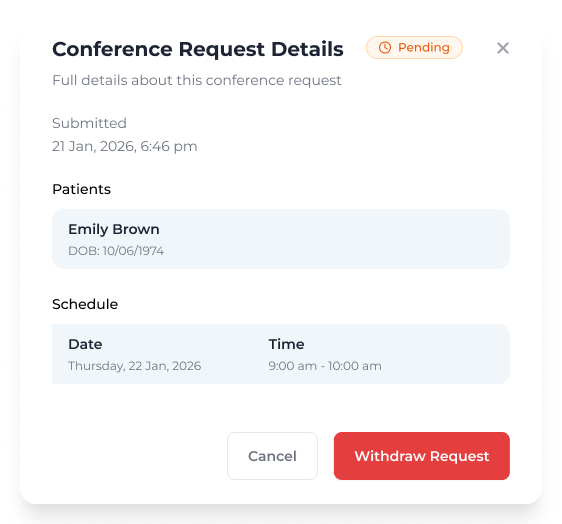
GP requests a conference

GPs flag patients

We work with GPs to identify chronic and complex patients who'd benefit from a conference.

2
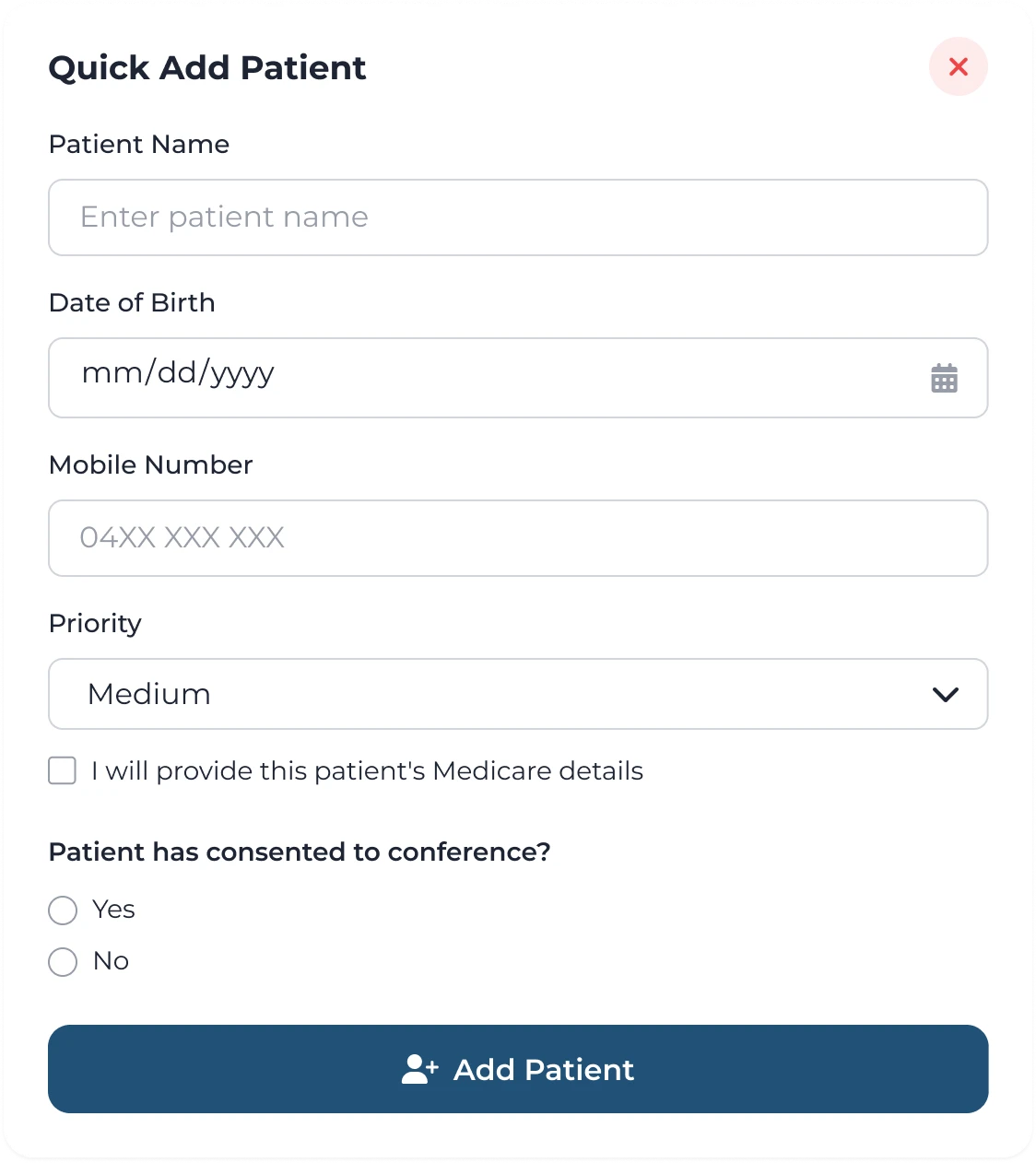
Patient added to a conference

We coordinate

We identify the right clinicians, manage availability, send invites and handle all logistics.

3
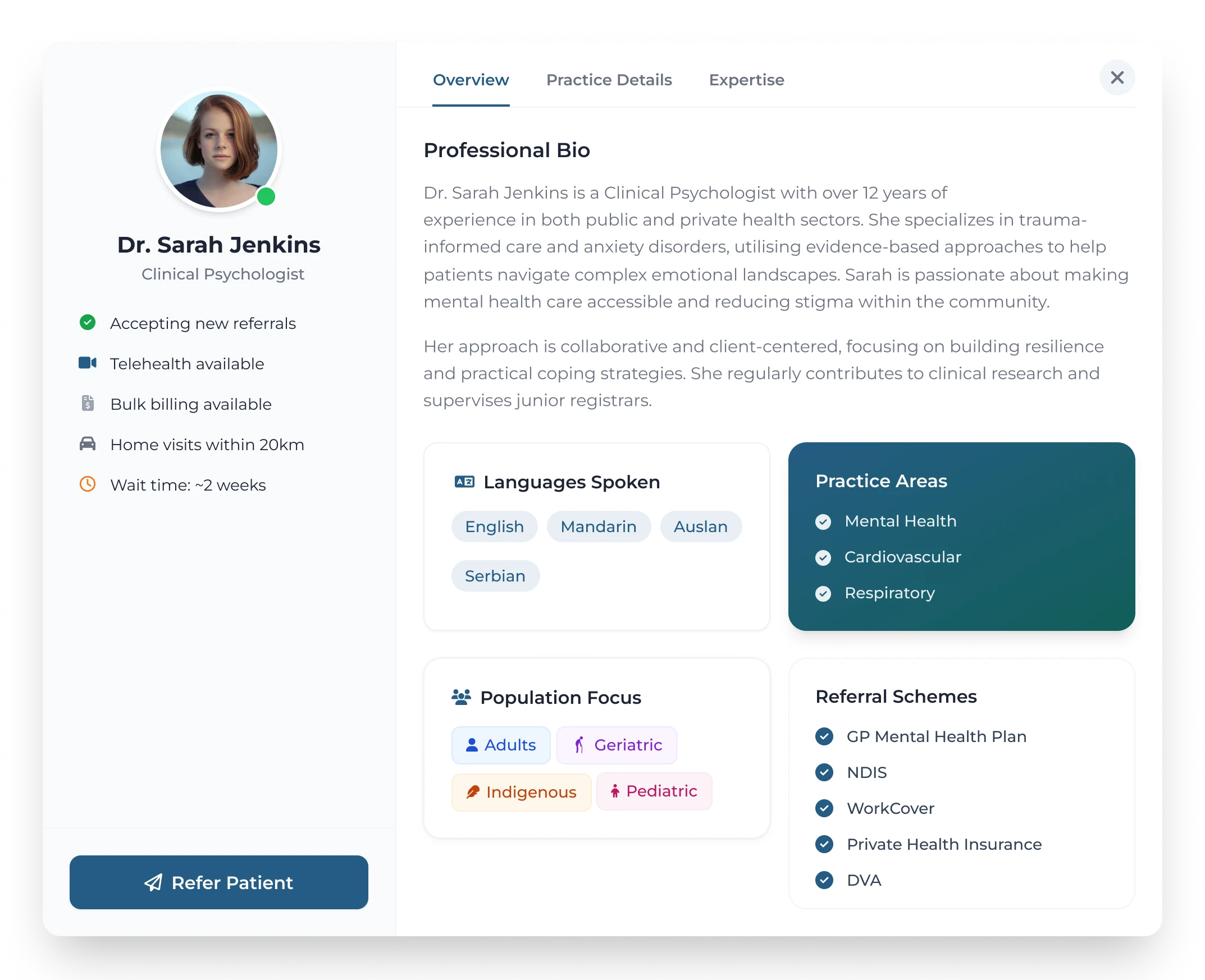
Care team is assembled

You contribute

Join via our secure platform and offer recommendations on treatment, resources and referral pathways.

4
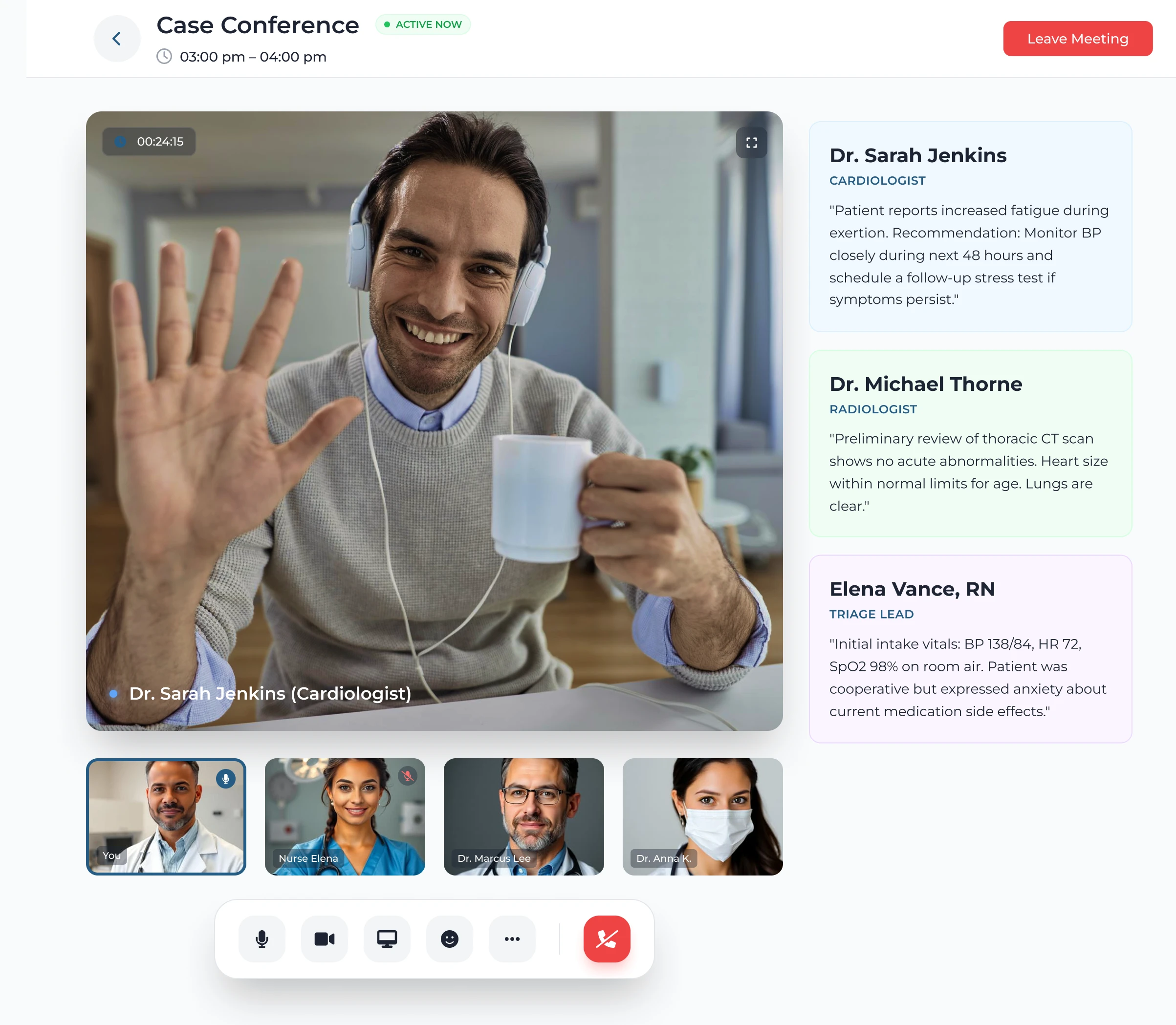
Join the conference

We bill & pay you

We manage Medicare billing and compliance, then send your disbursements each month.

When they happen

GPs run conferences in a regular weekly timeslot — attend the slots that fit your existing schedule.

How long they run

Typically one-hour sessions made up of three 20-minute conferences.

Where they happen

Entirely via our secure online platform — join and record your input from anywhere.

Patient attendance

Patients do not typically attend, and you don't need to have treated them to participate.

What you do

The GP presents the patient; you advise on treatment, resources and referral pathways.

Secure & compliant

Encrypted video, shared notes, live documentation and easy access to past records.

Who can join

Eligible mental health clinicians

We bring together clinicians from across the mental health disciplines — led by psychologists, whose expertise sits at the centre of these discussions.

Psychologist Clinical Psychologist Mental Health Nurse Mental Health Social Worker Mental Health Occupational Therapist

Common cases

The mental health conferences we facilitate most

Depression

Treatment-resistant depression and complex mood presentations.

PTSD

Post-traumatic stress disorder and complex trauma.

Bipolar disorder

Mood stabilisation and coordinated long-term management.

Eating disorders

Coordinated care across medical and psychological needs.

Any complex presentation qualifies

These cases benefit most — but any patient with a complex mental health presentation is eligible for a GP-led case conference.

The direction of travel

The future of Australian primary care is team-based

National policy is moving decisively toward GP-led, multidisciplinary models of care.

Patients should be able to access evidence-based multidisciplinary care through team-based primary care models, led by their GP.Vision for Australia's Health 2024–2027

General practice must evolve to include multidisciplinary GP-led team-based models of care, supported by technology — particularly for people with chronic and complex conditions.Vision for General Practice 2024

Our funding systems need to more effectively support multidisciplinary team-based care models in primary care and break down barriers to interprofessional collaboration.Strengthening Medicare Taskforce Report, December 2022

Funding arrangements will continue to be reviewed to ensure multidisciplinary team-based care becomes an embedded feature of primary health care.Primary Health Care 10 Year Plan 2022–2032

Help shape the future of healthcare in Australia

We're pioneering a new model of care — one where collaboration, communication and coordination come first. Join a growing network of psychologists and mental health clinicians.